Why Your HVAC System Is One of the Most Important Parts of Your Lowcountry Home
If you ask most homeowners to name the most important system in their house, you will hear a variety of answers. Some homeowners will say the roof. Others will mention plumbing or electrical systems. All of those are certainly important, but here in the Lowcountry, there is one system that quietly works harder than anything else—and it’s often the one we take for granted until something goes wrong.
Your air conditioning system.
Many places up north do not experience continuous humidity levels for more than a month or two. It’s typical for homeowners to use their HVAC sparingly. However, being on the East Coast & paired with the extreme heat, our Lowcountry atmosphere stays at higher humidity levels mostly year-round. This may be acceptable up north due to cooler weather, shorter heat waves where HVAC is not essential; this practice is detrimental to Lowcountry homes and their furnishings. One of the most common mistakes I witness owners do, is turn off their system completely, or adjust the interior temperature to 80/85 with the intention to save electricity. Understand that HVAC use in the Lowcountry is more about controlling the humidity than the temperature.
Proper humidity levels for any interior building are 30-50%. Mold growth actively triggers when indoor relative humidity consistently rises above 60%. At this threshold, moisture suspended in the air begins to absorb into porous household materials like drywall, wood framing, and carpets. Once these materials trap enough water, dormant mold spores germinate and form active colonies within 24 to 48 hours. That is why an HVAC failure isn’t simply inconvenient. It can quickly become one of the most serious maintenance issues a homeowner faces.
We’ve seen it happen more than once. A homeowner leaves for a week at the beach, heads north for the summer, or locks up a second home after a wonderful vacation. Everything is working perfectly when they leave. Somewhere between Tuesday afternoon and Wednesday morning, the air conditioner stops running.
The homeowner will not discover any of it until they return—unless someone else is checking on the property.
That is one of the reasons scheduled property audits are so valuable. During each visit, we are not simply making sure the lights are off and the doors are locked. One of the very first things we notice is whether the house feels the way it should. Is the temperature where it is supposed to be? Does the home feel unusually humid? Is the HVAC system running normally? Has anything changed since our last visit?
Those questions may seem simple, but they are often the first indication that something isn’t right.
The encouraging news is that HVAC problems do not happen without warning. Air conditioners often give us subtle clues before they stop working altogether. You may notice the system running longer than usual, rooms cooling unevenly, unusual noises, excess condensation, or an unexplained increase in your electric bill. Even a faint musty smell can signal that moisture is not being removed properly.
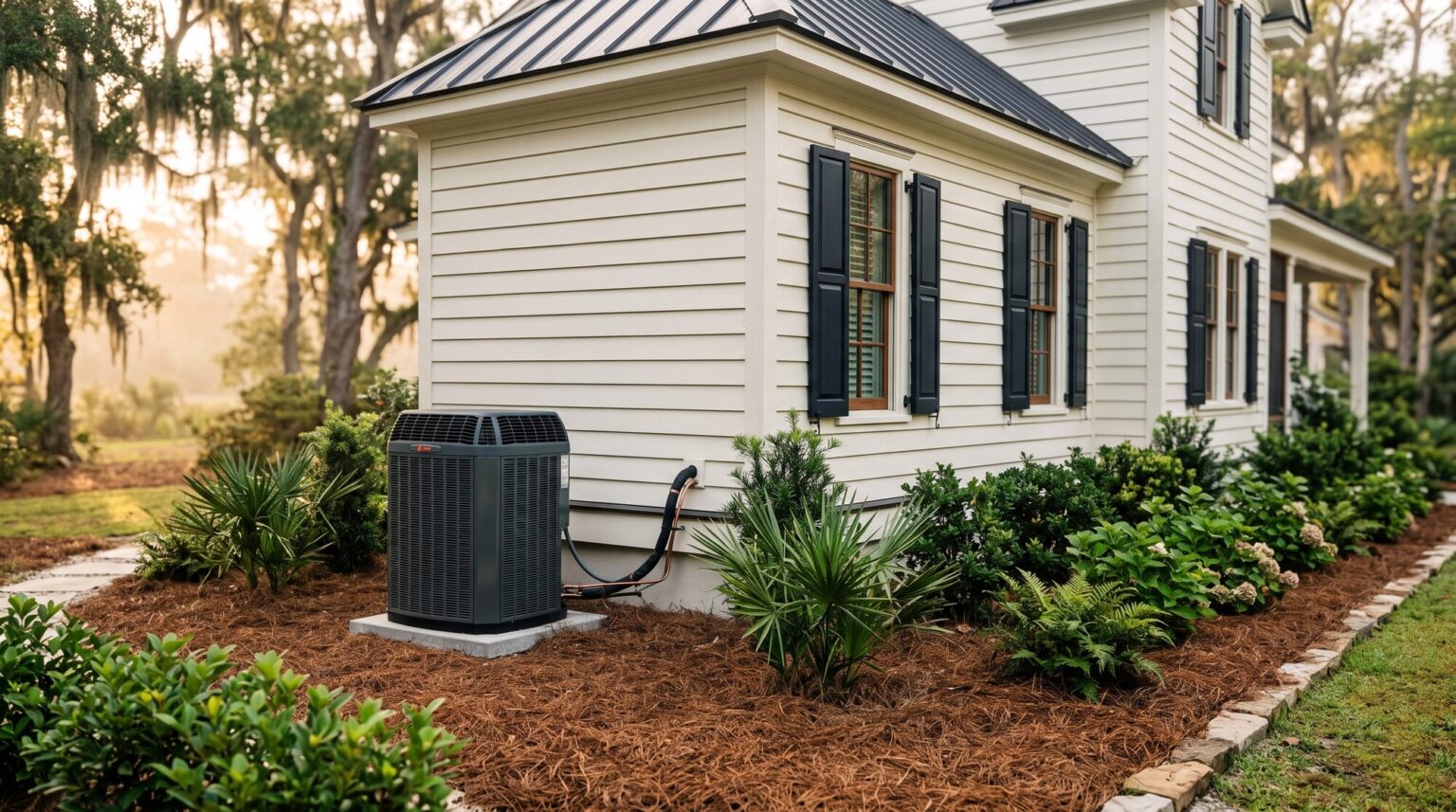
Routine maintenance goes a long way toward preventing problems. Replacing air filters regularly allows the system to operate efficiently and improves indoor air quality. Keeping the outdoor condenser unit free of leaves, pine straw, and overgrown landscaping improves airflow and reduces unnecessary strain on the equipment. Annual servicing by a qualified HVAC technician gives professionals the opportunity to identify worn components before they fail during the hottest week of the year—which, somehow, always seems to be when they choose to quit.
Many homeowners are surprised to learn that one of the most common service calls involves a clogged condensate drain line. Every day your air conditioner removes moisture from the air, and that water must go somewhere. If the drain line becomes blocked by algae, debris, or buildup, water can back up into the system, overflow, and create moisture problems inside the home. It is a small maintenance item that can lead to considerable damage if it’s ignored.
Vacation homes require an added layer of attention because there simply isn’t anyone there to notice the early warning signs. An HVAC system does not know the owners are spending the summer in Ohio or enjoying a cruise through the Mediterranean. It will continue running until something fails. Without regular home visits, a problem may go undiscovered for weeks.
That is why we always tell homeowners that one of the most valuable things we provide isn’t a repair—it’s time. Time to respond. Time to call a trusted HVAC contractor. Time to correct a problem before excess humidity begins affecting the home. In the Lowcountry, those extra days can make an enormous difference.
It’s also worth remembering that your HVAC system is only one part of your home’s overall moisture management strategy. Proper attic ventilation, good insulation, well-sealed windows and doors, and routine maintenance all work together to help control humidity. When one piece of that system isn’t functioning properly, the others are forced to work harder.
One of the things we enjoy most about our work is making the phone call that begins with, “We found something, but we caught it early.” Those conversations are far easier than the ones that begin after a homeowner opens the front door and immediately realizes something has gone terribly wrong.
Living in the Lowcountry means accepting that heat and humidity are simply part of the landscape. Fortunately, they don’t have to become a threat to your home. With regular maintenance, routine inspections, and someone paying attention while you’re away, your HVAC system can continue doing what it was designed to do—protecting your home every single day, even when you’re not there to think about it.
Home Management of the Lowcountry’s Suggested HVAC Checklist
Protecting your air conditioning system doesn’t have to be complicated. A few simple habits can extend its life and reduce the likelihood of unexpected breakdowns.
- Replace HVAC filters regularly.
- Schedule professional maintenance at least once each year.
- Keep the outdoor condenser unit clear of leaves, pine straw, and landscaping.
- Inspect the condensate drain line during annual service.
- Listen for unusual noises or changes in performance.
- Pay attention to unexplained increases in energy bills.
- Keep vents inside the home clean and unobstructed.
- If your home is vacant for extended periods, have someone check the indoor temperature and humidity regularly.
- Address small HVAC concerns promptly before they become emergency repairs.
- Remember that your air conditioner protects your home as much as it protects your comfort.
Caring for Homes. Protecting Investments. Preserving the Lowcountry.
Our scheduled audits cover many aspects of your home, and HVAC is one of the most important. Our custom client portal keeps you informed in real time if any issue arises, and what steps are being taken to protect your home from such instances. You have 24/7 access to your portal wherever you are internationally.